What Trading Really Is (Beginner Explanation)
Introduction: Why Trading Feels So Confusing at First
If you’ve ever searched “what is trading”, you’ve probably run into two extremes.
On one side, trading is presented as an easy path to fast money. On the other, it’s buried under complicated charts, technical jargon, and explanations that sound like finance textbooks.
Many beginners assume trading is either gambling or something only financial experts understand. Neither is true.
Trading is actually a simple idea wrapped inside a complex environment. Once you understand the core concept — what traders are really doing — everything else starts making more sense.
This guide explains trading the way most people wish it had been explained the first time: clearly, practically, and without unnecessary complexity.
So, What Is Trading?
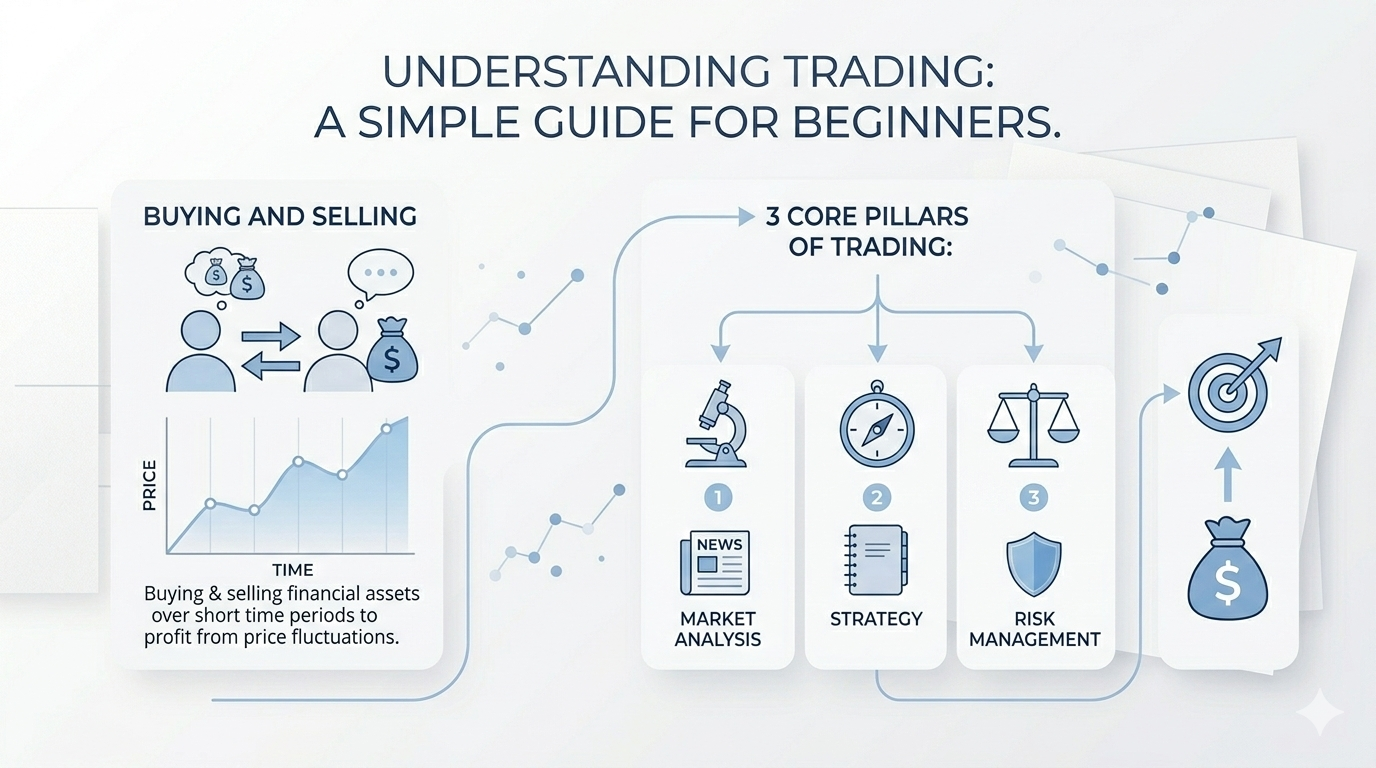
At its core, trading means buying and selling something with the goal of profiting from price changes.
That “something” could be:
- stocks
- currencies
- commodities
- cryptocurrencies
- or other financial assets
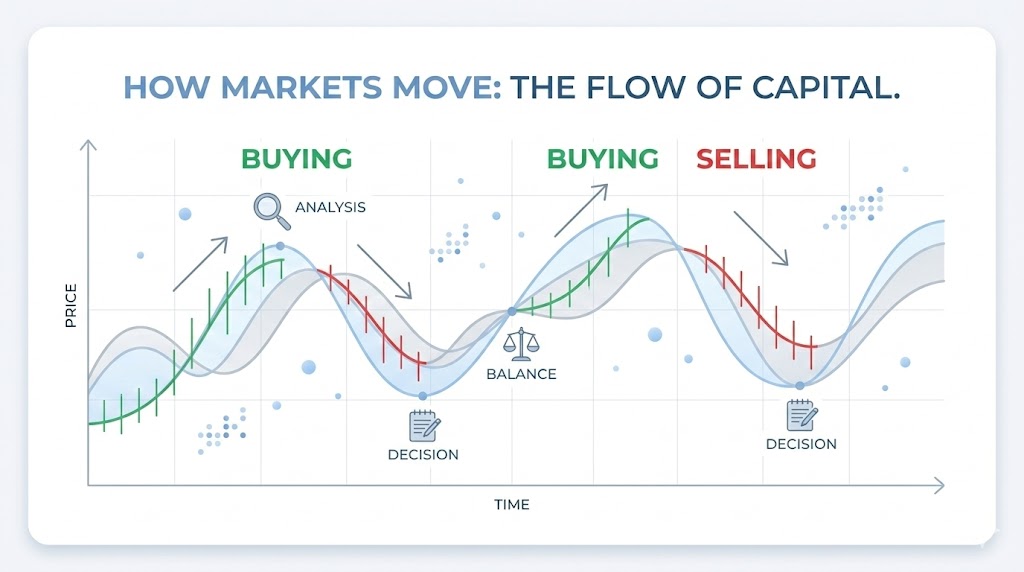
A trader buys an asset expecting the price to move in their favor. If the price rises, they sell for a profit. If it falls, they may lose money.
That’s the entire foundation.
At first, this sounds almost too simple — because it is simple conceptually. The difficulty comes from predicting price movement, which depends on human behavior, market psychology, and supply and demand.
Think of trading like a marketplace negotiation happening millions of times per second.
Prices move because people disagree about value.
How Trading Works (In Plain Language)
Let’s walk through how trading works step by step.
Imagine you believe a company is becoming more valuable. You buy its stock at $50 per share.
Later, more people want that stock, demand increases, and the price rises to $60.
You sell.
Your profit comes from the difference between buying and selling prices.
This process happens through trading platforms, where buyers and sellers meet digitally. Every trade is simply an agreement between two participants:
- someone willing to buy
- someone willing to sell
No magic. No hidden system.
Just transactions driven by expectations about the future.
Trading vs Investing (Where Beginners Often Get Confused)
Here’s where most people get it wrong.
They assume trading and investing are the same thing.
They’re related — but the mindset is different.
Investing usually focuses on long-term growth. Investors may hold assets for years based on company fundamentals.
Trading, on the other hand, typically focuses on shorter-term price movement.
A trader might hold a position for:
- minutes
- hours
- days
- or weeks
The goal isn’t necessarily owning a great company forever. The goal is understanding how prices move within financial markets.
Many beginners search for the difference between trading and investing because this distinction changes how you approach risk, research, and expectations.
Why Trading Exists in the First Place
Trading isn’t just speculation. Markets actually depend on traders.
Traders help:
- create liquidity (making it easy to buy and sell)
- discover fair prices
- keep markets active and efficient
Without trading activity, buying or selling assets would be slow and unpredictable.
In a way, traders are constantly answering one question:
“What is this asset worth right now?”
And the market price becomes the collective answer.
What Traders Actually Do Day to Day
Many beginners picture traders staring at flashing charts all day making rapid decisions.
Sometimes that happens — but most trading involves preparation and patience.
A typical trader might:
- analyze price movement
- study market trends
- manage risk carefully
- wait for specific conditions before entering a trade
- review past trades to improve decisions
Ironically, good trading often involves doing less, not more.
New traders often believe success comes from constant action. Experienced traders know waiting is part of the job.
How Do Traders Make Money?
This is one of the most searched beginner questions: how does trading make money?
Profits come from price differences.
There are two basic scenarios:
1. Buying Low, Selling Higher
The traditional approach most beginners understand.
2. Selling First, Buying Later
Some traders profit when prices fall by using strategies like short selling.
Either way, profits and losses come from price movement — not from the asset itself generating income immediately.
But here’s the important part:
Trading is not about being right all the time.
It’s about managing risk so winners outweigh losers over many trades.
Common Misconceptions About Trading
“Trading is gambling.”
Trading becomes gambling when decisions lack strategy or risk management. Structured trading relies on probabilities and planning.
“You need a lot of money to start.”
Modern platforms allow small starting amounts. Knowledge matters far more than account size early on.
“Successful traders predict the future.”
They don’t. They manage uncertainty.
“More trades mean more profit.”
Usually the opposite. Overtrading is one of the fastest ways beginners lose money.
The Real Skills Behind Trading
Understanding trading basics goes beyond charts.
Key skills include:
- risk management
- emotional control
- patience
- probability thinking
- decision-making under uncertainty
Many beginners focus entirely on strategies but ignore psychology. Yet emotional reactions — fear and greed — drive much of market volatility.
Learning to manage yourself is often harder than learning the market.
Realistic Expectations for Beginners
Let’s be honest about something rarely said clearly.
Trading is a skill, not a shortcut.
Many beginners expect quick income because online content highlights success stories. What’s less visible is the learning curve.
Early stages usually involve:
- confusion
- small mistakes
- adjusting expectations
- gradual improvement
Think of trading like learning a language. You don’t become fluent after memorizing vocabulary — you develop understanding through practice and experience.
The goal at the beginning isn’t profit.
It’s understanding how markets behave.
Practical Advice If You’re Just Starting
If you’re learning trading for the first time, focus on foundations.
Start with understanding before strategy.
Helpful beginner steps:
- Learn how financial markets function.
- Observe price movement without trading immediately.
- Use demo accounts to practice.
- Study risk management early.
- Keep expectations realistic.
Many beginners rush into complex strategies before understanding what a trade actually represents.
Slow learning often leads to faster long-term progress.
Why Understanding Trading Matters
Even if you never become an active trader, understanding trading changes how you see money and markets.
You begin noticing:
- how news affects prices
- why markets move suddenly
- how collective psychology shapes value
- how risk and reward interact
Trading education isn’t just about making trades — it’s about understanding how modern financial systems operate.
FAQ Section
What is trading in simple words?
Trading means buying and selling assets to profit from price changes over time.
How does trading work for beginners?
Beginners use trading platforms to buy or sell assets based on expected price movement while managing risk.
Is trading risky for beginners?
Yes. Without education and risk management, losses are common. Learning fundamentals reduces unnecessary risk.
Can anyone learn trading?
Most people can learn the basics, but consistency requires discipline, patience, and practice.
Do you need a lot of money to start trading?
No. Many platforms allow small starting amounts, though beginners should prioritize learning over earning.
Is trading the same as investing?
No. Investing focuses on long-term growth, while trading typically targets shorter-term price movements.
How long does it take to learn trading?
Understanding basics can take weeks; developing skill often takes months or years of experience.
Why do people trade instead of invest?
Some traders prefer short-term opportunities and active decision-making rather than long-term holding.
What skills do traders need most?
Risk management, emotional discipline, and decision-making are more important than prediction.
Is trading gambling?
Trading without strategy resembles gambling. Structured trading relies on planning and probability.